From Fuengirola to Finland – easier than one might think
When I was a child, people often asked me what I wanted to be when I grew up. I never said a scientist or a researcher. I chose this path in high school, where the “clever” students were expected to go into science. In Spain, science-related studies were seen as a safer option, thought to offer more job opportunities.
These expectations likely influenced my decision to study biochemistry. Early in my degree, however, I became aware of how little investment there was in science and research. But it was during the pandemic that I realized that I might need to move abroad to pursue my academic and professional goals. For a short time, people around me understood the importance of scientific research, but once the pandemic was more or less “under control” (thanks to that very research), many reverted to questioning why we should invest in science and what kind of jobs a degree like biochemistry could be useful for.
Tourism versus science – a choice
Since my family’s income has always depended on tourism, it was hard for me to know whether they truly supported my scientific ambitions, especially in a country where tourism is the main source of money. However, when I discovered the possibility of studying a master’s degree for free in another European country, I still didn’t know whether a scientific career would be possible. Even so, it felt worthwhile to move to a place with a different society, language, culture, and everything, just to try. In the end, there was no real alternative but to take that risk.
I eventually came to Finland, not only because the University of Turku was the first European university that accepted me, but also because my mother’s friends are from Kotka, and I grew up in Fuengirola, often called little Finland in Spain. I felt supported both by the University of Turku and by knowing a Finnish person who could guide me through the first steps after my arrival. That was all I needed at the beginning. My mother says I adapted very well to Finnish society, and perhaps this is because I had grown up surrounded by Finns.
What I a really wanted to do…
Throughout the master’s degree, the possibility of choosing elective courses from different programs or degrees allowed me to begin building a professional path in drug discovery through computational methods. This experience encouraged me to think ambitiously, such as working toward the discovery of a potential drug candidate to treat a particular type of cancer. My motivation has grown even stronger thanks to the opportunity to pursue my doctoral studies in the same research group where I started as a research assistant.
Over time, I have realized that even failures are achievements in a research career, especially in drug discovery, because every result contributes to knowledge and understanding. I also came to see that, in answer to the question I was asked when I was young, what I truly wanted was to help others through my work.
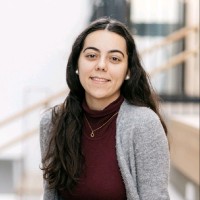
Paola Moyano-Gomez
Doctoral Researcher, Institute of Biomedicine