
Visiting professor Career talk by Anna Bigas – A life in Notch: from Blood stem cells to leukemia
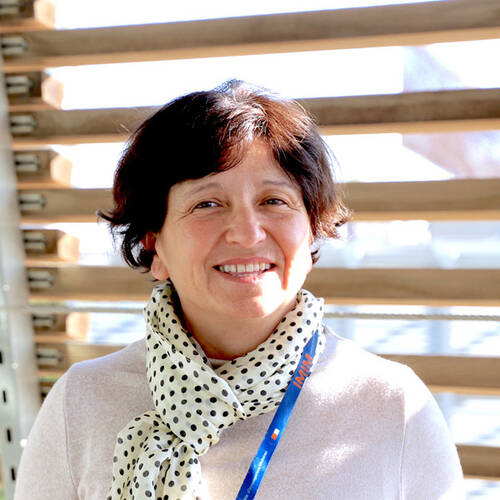
Welcome to a Career talk by InFLAMES visiting professor Anna Bigas!
Speaker: Anna Bigas; Hospital del Mar Research Institute Barcelona, Josep Carreras Leukemia Research Institute, Spanish Cancer Virtual Center
Title: A life in Notch: from Blood stem cells to leukemia
Time: 5 May 2026, 11-12
Location: Arje Scheinin hall, Dentalia
Host: Professor Cecilia Sahlgren, Åbo Akademi University
Coffee and sandwiches will be served at the start of the talk. After the presentation professor Bigas will be available for lunch with early career researchers (12:00-13:30). Register for the lunch here: https://link.webropol.com/s/bigas-lunch.
Biography
Anna Bigas has built her scientific career around a fundamental question: how do signaling pathways govern the balance between stem cell formation, differentiation, and malignant transformation?
Trained as a cell biologist at the University of Barcelona and later at the Fred Hutchinson Cancer Research Center in Seattle, Bigas was among the first to demonstrate that Notch signaling actively regulates hematopoietic differentiation. At a time when Notch was largely viewed through a developmental lens, her work helped position it as a central regulator of blood formation.
Over the past two decades, her laboratory has redefined how signaling dosage and context control hematopoietic stem cell (HSC) emergence. She demonstrated that Jagged1-mediated Notch signaling is required for embryonic HSC generation, that transient Wnt/β-catenin activity is essential for definitive hematopoiesis, and that Notch signal strength, rather than binary activation, determines hemogenic endothelial fate. Her group further identified critical Notch transcriptional targets in emerging HSCs and uncovered cis-inhibitory mechanisms that sustain embryonic HSC identity. Together, these discoveries established the principle that stem cell specification depends on tightly calibrated signaling thresholds, a concept now central to efforts to engineer HSCs in vitro.
Bigas also revealed how developmental signaling logic becomes hijacked in leukemia. In a landmark study, she demonstrated that Notch sustains constitutive NFκB activation in T-cell acute lymphoblastic leukemia (T-ALL) through repression of the tumor suppressor CYLD, uncovering a direct mechanistic bridge between two major oncogenic pathways. Her laboratory later showed that β-catenin is required for T-ALL initiation, identified relapse clones that pre-exist at diagnosis, and recently defined a β-catenin–dependent RNA biosynthesis program driving therapy resistance.
Beyond leukemia, her work uncovered unexpected chromatin-bound roles of IκBα and IKKα in regulating stemness, DNA damage responses and therapy resistance, and identified fetal-like transcriptional programs that fuel colorectal cancer metastasis.
Now Scientific Director of CIBERONC in Spain and an elected EMBO member, Bigas combines fundamental mechanistic discovery with translational coordination at the national and European levels, including contributions to the European Cancer Mission initiative UNCAN.eu.
Her work has consistently shown that signaling pathways do not merely switch genes on or off. They operate in gradients, thresholds and chromatin contexts, and when those parameters shift, stem cells emerge or malignancies arise. By decoding those rules, Bigas has reshaped how the field understands stem cell fate and leukemic transformation.
Selected publications
- Chromatin activity of IκBα mediates the exit from naïve pluripotency (2025, Elife) https://doi.org/10.7554/elife.102784
- An unbiased genomewide screen uncovers 7 genes that drive hematopoietic stem cell fate from mouse embryonic stem cells (2025, Blood) https://doi.org/10.1182/blood.2024027742
- IκBα controls dormancy in hematopoietic stem cells via retinoic acid during embryonic development (2024, Nat Commun) https://doi.org/10.1038/s41467-024-48854-5
- Cis inhibition of NOTCH1 through JAGGED1 sustains embryonic hematopoietic stem cell fate (2024, Nat Commun) https://doi.org/10.1038/s41467-024-45716-y
- β-Catenin activity induces an RNA biosynthesis program promoting therapy resistance in T-cell acute lymphoblastic leukemia (2023, EMBO Mol Med) https://doi.org/10.15252/emmm.202216554